
As the savory aroma of bubbling stew fills the kitchen, I can’t help but smile at the warm memories of comfort food shared with loved ones. Today, I’m excited to introduce you to Budae Jjigae, a one-pot Korean Army stew that brilliantly marries traditional flavors with a sprinkle of nostalgia. This quick meal is not only customizable with your favorite meats, vegetables, and spicy kimchi, but it’s also a delightful way to bring friends and family together for a cozy gathering. Perfect for chilly evenings or simply when you crave something hearty, this dish will make you feel like a rockstar in your own kitchen. Ready to discover a meal that feels like a warm hug? Let’s dive into this delicious recipe!
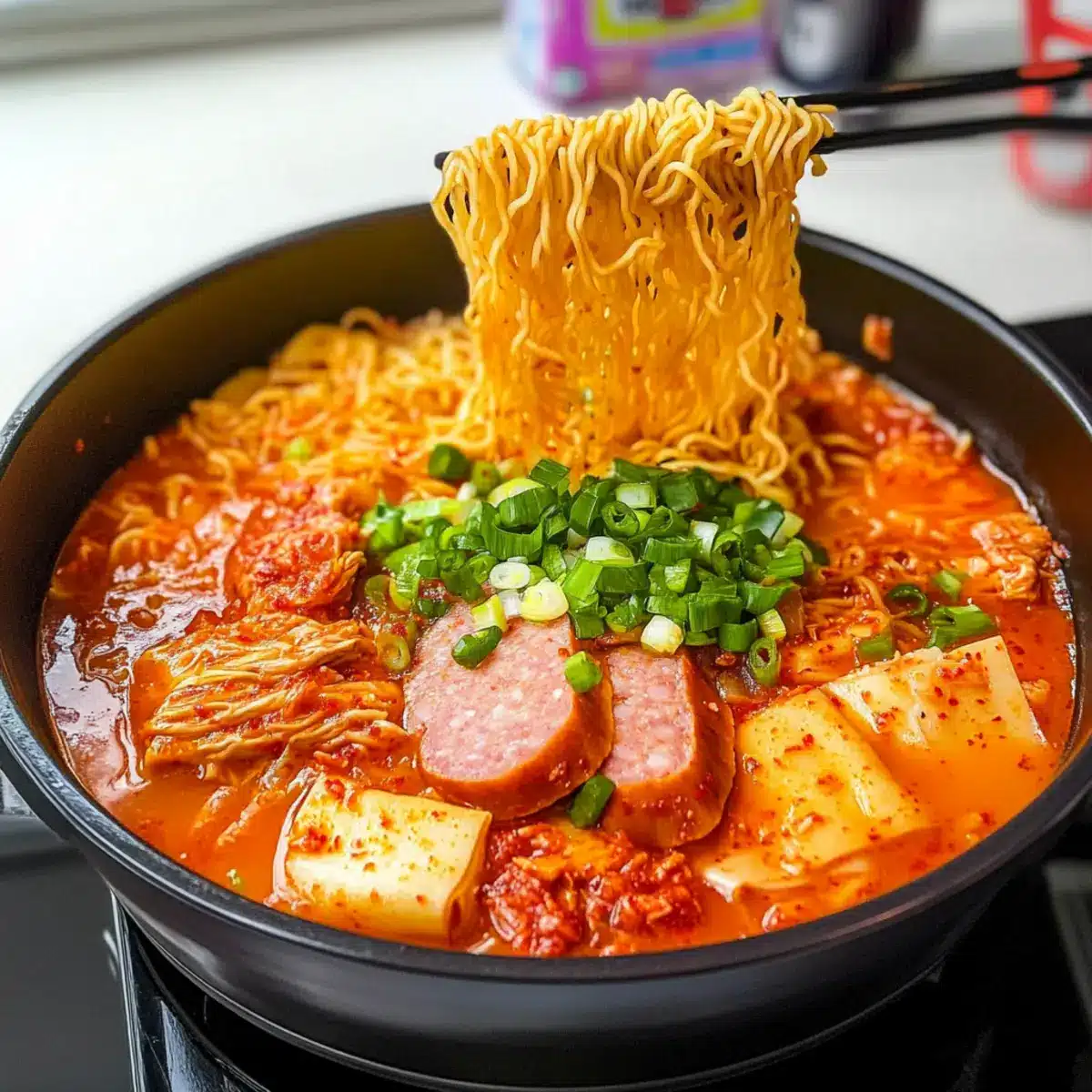
Why is Budae Jjigae a Must-Try?
Comforting, this one-pot stew wraps you in warmth with its rich, spicy broth that beckons for second servings. Customizable, you can tailor it to your liking, swapping ingredients like Spam for tofu or adding extra veggies for a nutritious boost. Quick-to-make, it’s perfect for busy weeknights, allowing you to whip up a satisfying meal in no time. Nostalgic, it evokes memories of cozy gatherings, making it ideal for sharing with family and friends. Enjoy it with a side of steamed rice or crispy tofu for a complete experience that’s sure to delight!
Budae Jjigae Ingredients
• Dive into the world of flavors with these essential ingredients.
For the Base
- Spam – Adds a savory, salty contrast to the dish; can substitute with turkey or tofu for a lighter option.
- Sausages – Provides depth of flavor; feel free to use hotdogs or your favorite type of sausage.
- Kimchi – Delivers a spicy, tangy element essential to Budae Jjigae; choose your preferred type based on heat tolerance.
- Tofu – Introduces a soft texture and additional protein; firm tofu works best but can be omitted for a heartier dish.
For the Broth
- Garlic – Enhances the overall flavor profile; fresh is best, but garlic powder can work in a pinch.
- Gochugaru – Brings a mild heat and smokiness to the stew; adjust to taste for personal spice preference.
- Gochujang – Adds depth and richness; tweak the amount based on desired spiciness.
- Soy Sauce – Contributes umami flavors; low-sodium options are great for a healthier choice.
- Mirin – Adds a touch of sweetness to balance flavors; feel free to substitute with a splash of rice vinegar.
- Sugar – Helps to round out the flavor; adjust based on your taste preference.
- Black Pepper – Adds a subtle heat; fresh ground offers the best flavor.
For the Noodles & Veggies
- Ramen Noodles – Serves as a comforting base; substitute with rice noodles or udon if you prefer.
- Onion – Provides sweetness and flavor; shallots or scallions can work as alternatives.
- Mushrooms (e.g., enoki) – Adds umami flavor and texture; any favorite mushroom can be used here.
- Rice Cakes – Chewy and excellent for absorbing flavors; potatoes or more noodles are good substitutes if unavailable.
These ingredients come together to create a soul-soothing, delicious Budae Jjigae that invites everyone to gather around the table. Enjoy the process of crafting a dish that is as versatile as it is satisfying!
Step‑by‑Step Instructions for Budae Jjigae
Step 1: Prepare the Sauce
In a mixing bowl, combine 2 tablespoons of minced garlic, 1 tablespoon gochugaru, 2 tablespoons gochujang, 2 tablespoons soy sauce, 1 tablespoon mirin, 1 teaspoon sugar, and a pinch of black pepper. Whisk until well blended, creating a flavorful sauce. Set this mixture aside as it will be the heart of your Budae Jjigae, adding depth to the broth.
Step 2: Layer Ingredients
In a shallow pot over medium heat, start layering your ingredients. Begin with slices of Spam, cooked sausages, and any firm tofu you’ve decided to use. Follow with rice cakes, sliced onion, tender enoki mushrooms, and generously spooned kimchi. Arrange everything neatly for even cooking, allowing the vibrant colors to create an inviting display.
Step 3: Add the Broth
Pour the prepared sauce over the layered ingredients, ensuring an even distribution. Then, slowly add 4 cups of chicken broth to the pot, covering the ingredients thoroughly. At this stage, bring the mixture to a boil over medium-high heat, watching for bubbles to break the surface, signaling that the cooking process is underway.
Step 4: Incorporate the Noodles
Once the pot reaches a rolling boil, remove the lid and add 2 packs of ramen noodles on top. Sprinkle shredded cheese if desired for a creamy finish. Cover the pot again and let it cook for another 5-7 minutes, or until the noodles soften and absorb the broth’s flavors, creating a rich, comforting texture.
Step 5: Garnish and Serve
After the noodles are tender, remove the pot from heat. Garnish your steaming Budae Jjigae with freshly chopped green onions for an aromatic touch. Serve hot, preferably over a bed of steamed rice, allowing your family and friends to enjoy this delicious one-pot meal.
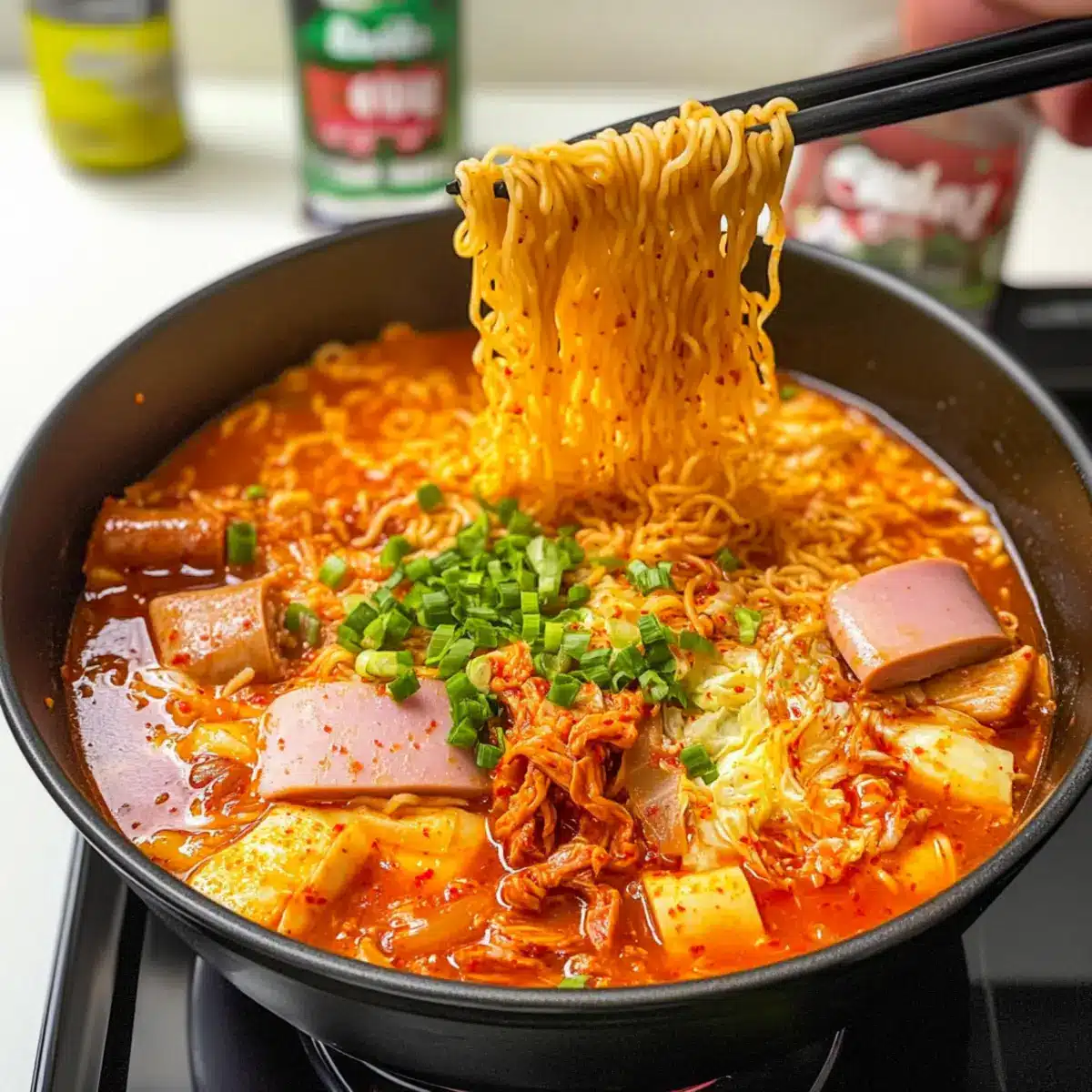
Budae Jjigae Variations & Substitutions
Feel free to explore these tasty twists and swaps to make your Budae Jjigae truly your own!
- Meat Swap: Replace Spam with bacon or smoked salmon for a unique smokey flavor that elevates your stew.
- Leafy Greens: Toss in some spinach or bok choy for an added nutritional boost and a pop of color that brightens each bite.
- Gluten-Free Option: Switch the ramen noodles with quinoa or barley for a hearty, gluten-free alternative that brings its own delightful texture.
- Extra Spice: Looking for more heat? Add a sprinkle of cayenne pepper or a dash of sriracha to the broth for fiery flavor!
- Mushroom Medley: Experiment with different types of mushrooms—try shiitake or portobello for a deeper umami richness.
- Sweet Potatoes: Substitute rice cakes with cubed sweet potatoes, adding a natural sweetness that balances the savory broth beautifully.
- Vegetal Delight: Add diced zucchini or bell peppers to introduce some crunchy veggies, enhancing both texture and flavor.
- Seafood Twist: For a delightful twist, include shrimp or clams for a seafood version, creating a stew that feels like a beachside retreat.
Budae Jjigae is such a versatile dish, so let your creativity lead the way! And if you’re curious about more recipes featuring fresh ingredients, check out our ideas for seasonal vegetable dishes and delicious quick meal options. Happy cooking!
Expert Tips for Budae Jjigae
-
Watch the Heat: Keep an eye on your pot to prevent overflowing. A simmering boil is ideal for even cooking and flavor melding.
-
Customize Your Spice: Adjust the heat by varying the amount of gochujang. Start small and taste as you go to find your perfect balance in flavor.
-
Layering Matters: Don’t mix the ingredients too early; layering enhances flavor depth. Let the ingredients cook first before stirring.
-
Use the Right Pot: Opt for a wide, shallow pot for optimal cooking. This helps achieve even flavor infusion and prevents burning.
-
Enhance the Broth: For a richer flavor, simmer the broth longer. You can also add more kimchi for an extra kick of tanginess.
-
Storage Savvy: Leftovers can be stored in the fridge for up to 3 days. Reheat gently, adding a splash of broth to revive the stew’s texture.
What to Serve with Budae Jjigae?
As the spicy, savory notes of Budae Jjigae swirl in your kitchen, consider these delightful pairings to create a full, comforting meal.
-
Steamed White Rice: Acts as a neutral base, soaking up the broth’s rich flavors while adding a satisfying texture.
-
Crispy Fried Tofu: Provides a crunchy contrast to the soft noodles, enhancing the meal with extra protein and warmth. Pairing it with a light dipping sauce can elevate your dining experience.
-
Korean Pancakes (Pajeon): These savory pancakes add a delightful crunch that complements the soft ingredients in your stew; they’re fun to dip in soy sauce for an extra punch.
-
Kimchi Side Dish: A classic accompaniment, kimchi serves both as a palate cleanser and an added layer of spice to keep things lively.
-
Pickled Vegetables: Bright, tangy pickles balance the richness of the stew, bringing a refreshing crunch that enhances each bite.
-
Grilled Corn on the Cob: Offers a sweet, smoky flavor that contrasts beautifully with the stew, creating a delicious harmony of tastes.
-
Cold Soba Noodles: The chilled, nutty flavors of soba noodles provide a refreshing counterpart to the hot, spicy stew, making every bite interesting.
-
Green Onion Salad: A light and tangy salad with sesame dressing complements the flavors of Budae Jjigae while adding a fresh, crunchy element.
-
Soju or Makgeolli: Enjoy a glass of traditional Korean spirit to elevate the meal. The subtle sweetness and alcohol content perfectly balance the heat of Budae Jjigae, creating a delightful dining experience.
Storage Tips for Budae Jjigae
Fridge: Store leftover Budae Jjigae in an airtight container in the refrigerator for up to 3 days. This will keep the flavors intact while preventing it from absorbing unwanted odors.
Freezer: For longer storage, freeze Budae Jjigae in a freezer-safe container for up to 2 months. Make sure to leave some space at the top to allow for expansion as it freezes.
Reheating: When you’re ready to enjoy your leftovers, gently reheat Budae Jjigae on the stovetop with a splash of broth to bring back its delicious, warm texture. Avoid boiling to preserve the flavor.
Make Ahead Options
Budae Jjigae is a fantastic choice for busy home cooks looking to save time without sacrificing flavor! You can prepare the sauce (minced garlic, gochugaru, gochujang, soy sauce, mirin, sugar, and black pepper) up to 24 hours in advance; simply store it in an airtight container in the refrigerator to ensure it stays fresh. Additionally, you can layer the Spam, sausages, tofu, rice cakes, onion, enoki mushrooms, and kimchi in the pot, cover it tightly, and refrigerate for up to 3 days. When you’re ready to enjoy your meal, just add the broth and noodles, bring to a boil, and cook as directed—resulting in a delicious, home-cooked comfort meal that tastes just as delightful as if made fresh!
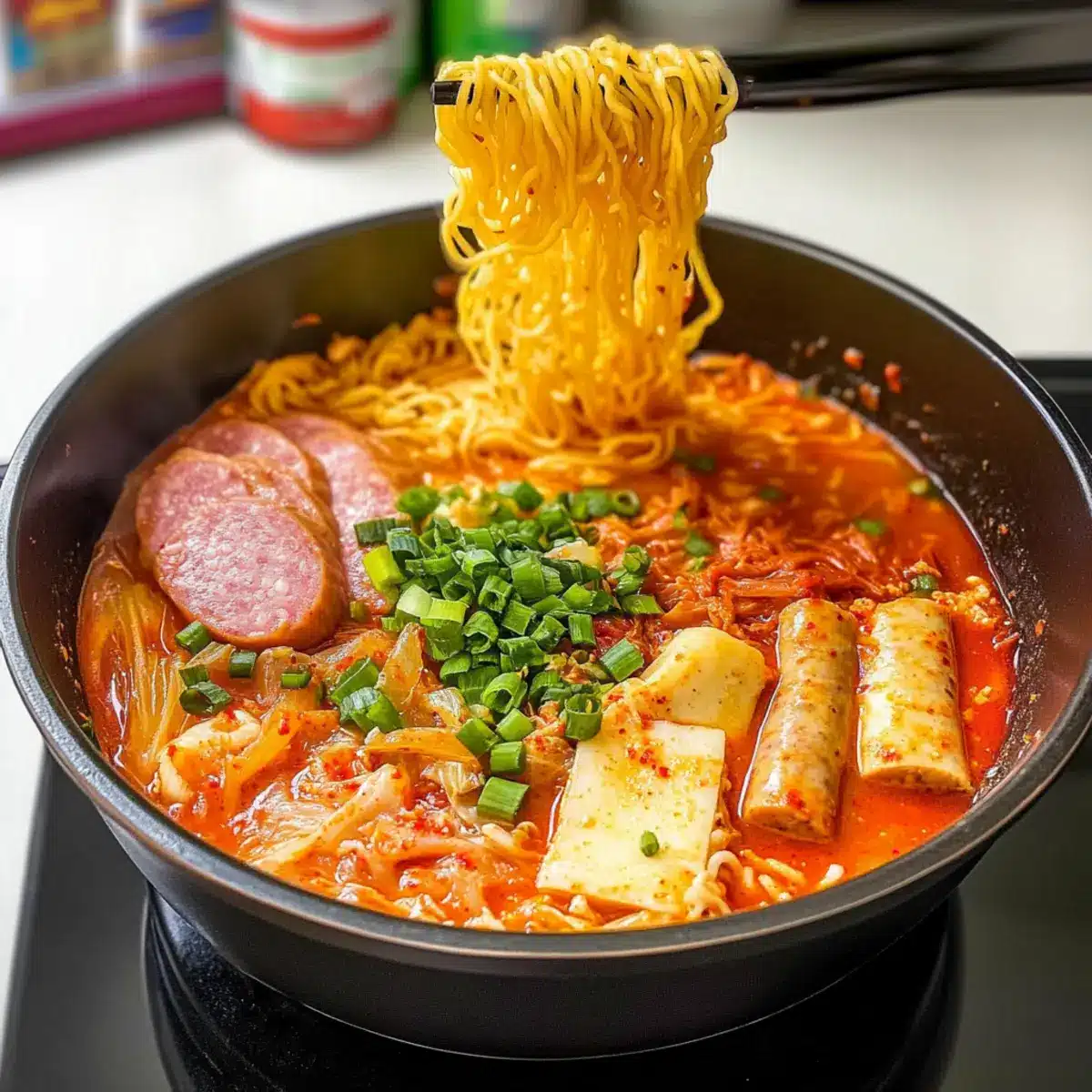
Budae Jjigae Recipe FAQs
How do I select the best kimchi for Budae Jjigae?
Absolutely! Aim for a kimchi that is tangy and flavorful. If possible, choose a well-fermented kimchi as it adds a deeper flavor to the stew. Look for varieties labeled “mature” or “aged” for the best results, but ultimately go for what matches your spice preference!
What’s the best way to store leftover Budae Jjigae?
You can store leftover Budae Jjigae in an airtight container in the refrigerator for up to 3 days. This keeps the flavors intact while avoiding the absorption of any unwanted odors. When reheating, simply warm it on the stovetop with a little splash of broth to revive its delicious texture.
Can I freeze Budae Jjigae?
Very much! To freeze Budae Jjigae, transfer it to a freezer-safe container, ensuring you leave some space at the top for expansion. It can be stored for up to 2 months. When you’re ready to enjoy it, let it thaw in the fridge overnight before reheating it gently on the stovetop.
What if my Budae Jjigae turns out too spicy?
If you find your Budae Jjigae is too spicy, don’t worry! You can add a bit of sugar or honey to mellow the heat. Alternatively, mixing in some coconut milk or additional broth can help dilute the spiciness without compromising the flavor. Stirrings can enhance the flavor depth!
Is there a way to make Budae Jjigae suitable for my vegetarian friends?
Absolutely! To create a vegetarian version, simply omit the Spam and sausages, substituting with more vegetables like bell peppers and zucchini. Firm tofu can still be included to provide protein. Use vegetable broth instead of chicken broth for the base; this way, everyone at the table can enjoy this comforting dish!
Can I add other vegetables to Budae Jjigae?
The more, the merrier! Feel free to add other veggies like bok choy, spinach, or mushrooms to enhance the nutritional content. Just prepare these additional ingredients by chopping them into bite-sized pieces and layering them in the pot with your other ingredients to ensure even cooking.
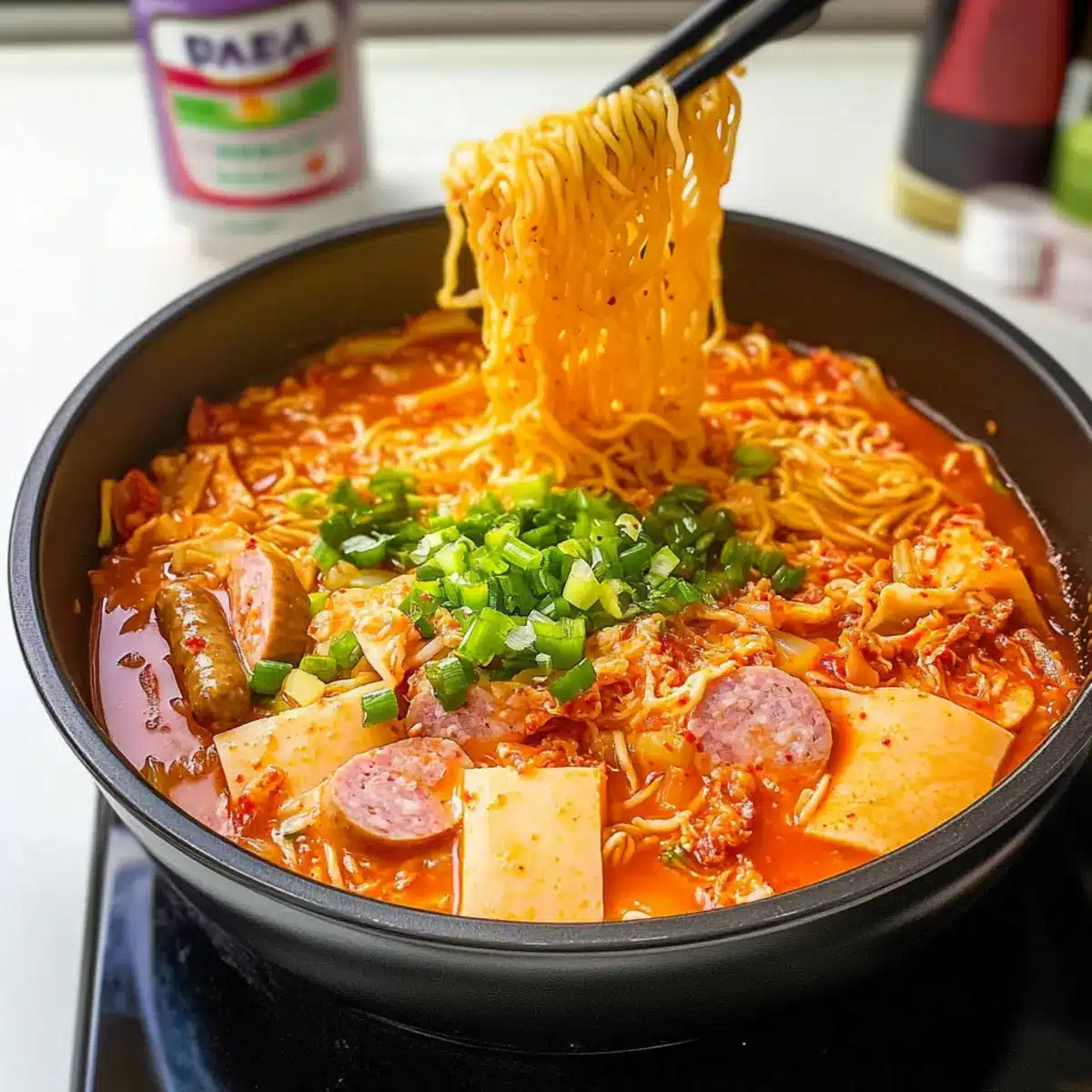
Comforting Budae Jjigae Recipe for Cozy Nights In
Ingredients
Equipment
Method
- In a mixing bowl, combine 2 tablespoons of minced garlic, 1 tablespoon of gochugaru, 2 tablespoons of gochujang, 2 tablespoons of soy sauce, 1 tablespoon of mirin, 1 teaspoon of sugar, and a pinch of black pepper. Whisk until well blended, creating a flavorful sauce.
- In a shallow pot over medium heat, start layering your ingredients with slices of Spam, cooked sausages, and any firm tofu. Follow with rice cakes, sliced onion, tender enoki mushrooms, and kimchi.
- Pour the prepared sauce over the layered ingredients, then add 4 cups of chicken broth, covering the ingredients. Bring the mixture to a boil.
- Once boiling, remove the lid and add 2 packs of ramen noodles on top, sprinkling cheese if desired. Cover and let cook for 5-7 minutes until noodles are tender.
- Remove pot from heat, garnish with green onions, and serve hot over steamed rice.
Leave a Reply